Stones & culture
Thirty-three stones, and what is actually on the record for each one: where it was mined, who cut it, what was written down about it and when. Where a tradition is recent, we say so.
Broviane sells this as jewellery. We make no claim that any stone affects health, wealth, or events.
01
White
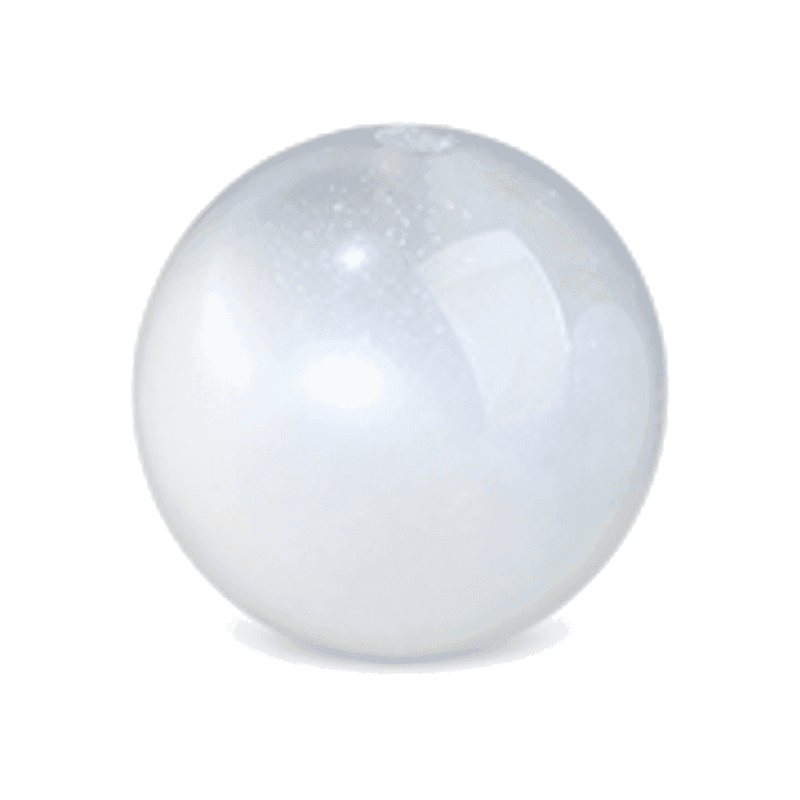
Documented record
White Moonstone
Roman writers thought it was moonlight caught and held; Vedic practice still keeps it as a stone of the Moon.
- Hardness
- Mohs 6–6.5
- Density
- 2.56–2.62 g/cm³
- Material
- Feldspar — two species grown into one another
- Sources
- Sri Lanka, southern India
Pliny called it selenites, after the moon goddess, and recorded the Roman belief that it waxed and waned with the moon. In Vedic practice it stands in for the pearl as a stone of the Moon, given on Mondays. The glow itself is real optics — light scattering between two feldspars grown into one another.
Traditions recorded
Greek and Roman
1st century CE
Pliny records the Roman name selenites and the belief that the stone waxed and waned with the moon. What they were describing is real optics: adularescence, light scattering off microscopically thin layers of two feldspars that grew into each other as the crystal cooled. It is one of the few ancient stone beliefs that turns out to be an accurate description of the thing in front of them.
Pliny, Naturalis Historia, Book 37
Vedic gem lore
Classical, still practised
In Jyotish the Moon's stone is the pearl, and moonstone — chandrakanta, “beloved of the moon” — is its accepted substitute, given on Mondays. In India it has long been a customary gift between lovers, which is the part of the tradition most visitors actually meet.
Art Nouveau
1890 – 1914
René Lalique and his contemporaries used moonstone constantly. Its soft, unfaceted glow suited a generation of jewellers who had tired of brilliance and wanted light that moved slowly. If a piece from 1900 looks lit from the inside, this is usually the stone doing it.

Documented record
Clear Quartz
The Greeks named it krystallos — ice — and believed it was water frozen so hard it would never thaw.
- Hardness
- Mohs 7
- Density
- 2.65 g/cm³
- Material
- Quartz, SiO₂
- Sources
- Brazil, Madagascar, Arkansas
Krystallos is the Greek word for ice: classical writers believed rock crystal was water frozen past thawing, and the word “crystal” descends from that guess. East Asian Buddhist practice also names it for water — shuijing, suishō — and has long used it for prayer beads.
Traditions recorded
Greek and Roman
1st century CE
Krystallos is simply the Greek word for ice. Pliny passes on the belief that rock crystal was water frozen over ages in Alpine cold, and reports that Nero, in a temper, smashed two crystal cups rather than leave them for anyone else. The word “crystal”, in every European language, descends from that mistaken guess.
Pliny, Naturalis Historia, Book 37
Buddhist practice, East Asia
Classical, still practised
Chinese and Japanese usage both name it for water — shuijing, suishō — and it appears in scriptural lists of the seven treasures. It is a standard material for prayer beads in both traditions, chosen partly because a clear bead shows dirt and therefore shows care.
Early modern Europe
16th – 17th century
Polished rock-crystal spheres were the working equipment of European scrying. John Dee kept one at Elizabeth I's court, and it sits in the British Museum today. Every fortune-teller's crystal ball in every later painting and film descends directly from objects like it.
Documented record
White Chalcedony
Named for Chalcedon on the Bosphorus, and cut into Roman seal rings because warm wax will not stick to it.
- Hardness
- Mohs 6.5–7
- Density
- 2.58–2.64 g/cm³
- Material
- Cryptocrystalline quartz
- Sources
- Turkey, India, Brazil
Chalcedony is named for Chalcedon on the Bosphorus. Roman engravers chose it for seal rings for a practical reason — warm sealing wax releases cleanly from it — and Sasanian and Islamic workshops kept cutting it for a thousand years after Rome for the same reason.
Traditions recorded
Greek and Roman
c. 1st century BCE onward
Chalcedony takes its name from Chalcedon, the Greek city on the Asian shore of the Bosphorus. Roman engravers favoured it for intaglio seals for an entirely practical reason: warm sealing wax releases cleanly from its surface. It is a stone chosen by working people for how it behaved, long before anyone asked what it meant.
Sasanian and Islamic workshops
3rd – 15th century
The same property kept it in work for more than a thousand years after Rome. Sasanian and later Islamic workshops cut chalcedony seals and signet stones in large numbers, many of them inscribed; they survive in enough quantity that whole museum cases are given over to them.
02
Black
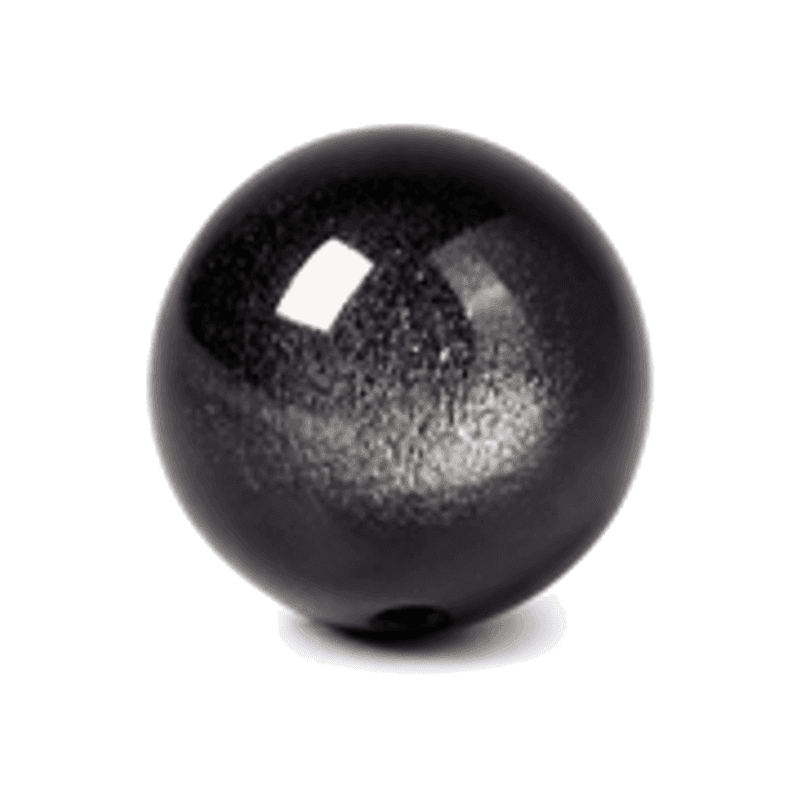
Documented record
Obsidian
Aztec workshops cut it into blades finer than a scalpel, and into mirrors that gave a god his name.
- Hardness
- Mohs 5–5.5
- Density
- 2.35–2.60 g/cm³
- Material
- Volcanic glass — no crystal structure at all
- Sources
- Mexico, Armenia, Iceland
Obsidian — itztli — was the cutting edge of Mesoamerica: blades, points, and polished mirrors after which the Aztec god Tezcatlipoca, “smoking mirror”, is named. It is volcanic glass with no crystal structure, which is why a fresh edge is finer than surgical steel.
Traditions recorded
Mesoamerica
c. 1200 BCE – 1521 CE
Obsidian — itztli in Nahuatl — was the cutting edge of an entire civilisation: blades, points, and the macuahuitl. Polished discs served as mirrors, and Tezcatlipoca, one of the principal Aztec gods, is named “smoking mirror” after them. A freshly struck obsidian edge is a few nanometres across, finer than surgical steel.
The Aegean
c. 12,000 – 3,000 BCE
Obsidian from the island of Melos was carried across the Aegean thousands of years before metal. Because each volcano's glass has its own chemical fingerprint, individual Neolithic blades can be matched to the outcrop they came from — early trade, mapped stone by stone.
Renaissance Europe
16th century
An Aztec obsidian mirror travelled to Europe after the conquest and ended up with John Dee, Elizabeth I's astrologer, who used it as a speculum. It is in the British Museum. The object crossed an ocean and changed meaning completely on the way — which is, in miniature, what happens to most stone lore.

Documented record
Black Onyx
Its flat parallel bands are what made the cameo possible — carve down through white and a figure appears in relief.
- Hardness
- Mohs 6.5–7
- Density
- 2.60 g/cm³
- Material
- Banded chalcedony
- Sources
- Brazil, India
Onyx's parallel bands are what make a cameo possible — the Gemma Augustea and the Great Cameo of France are both onyx, both two thousand years old. In Victorian Britain it became the stone of mourning jewellery, worn through the long court mourning after 1861.
DisclosureMost black onyx, ours included, is pale chalcedony dyed black — a technique Pliny already describes in the first century, and one the gem trade has used continuously ever since. The colour is stable and permanent.
Traditions recorded
Greek and Roman
c. 1st century BCE – 1st century CE
Onyx's parallel layers are what make a cameo work: cut down through a pale band into a dark one and the figure stands out in relief, with no paint and no join. The Gemma Augustea in Vienna and the Great Cameo of France in Paris are both onyx, both about two thousand years old, and both still perfectly legible.
Victorian Britain
1861 – 1901
Black onyx became the stone of Victorian mourning jewellery, worn alongside jet through the long court mourning after Prince Albert's death. It is one of the few cases where a whole society agreed, for forty years, on what a colour of stone meant.
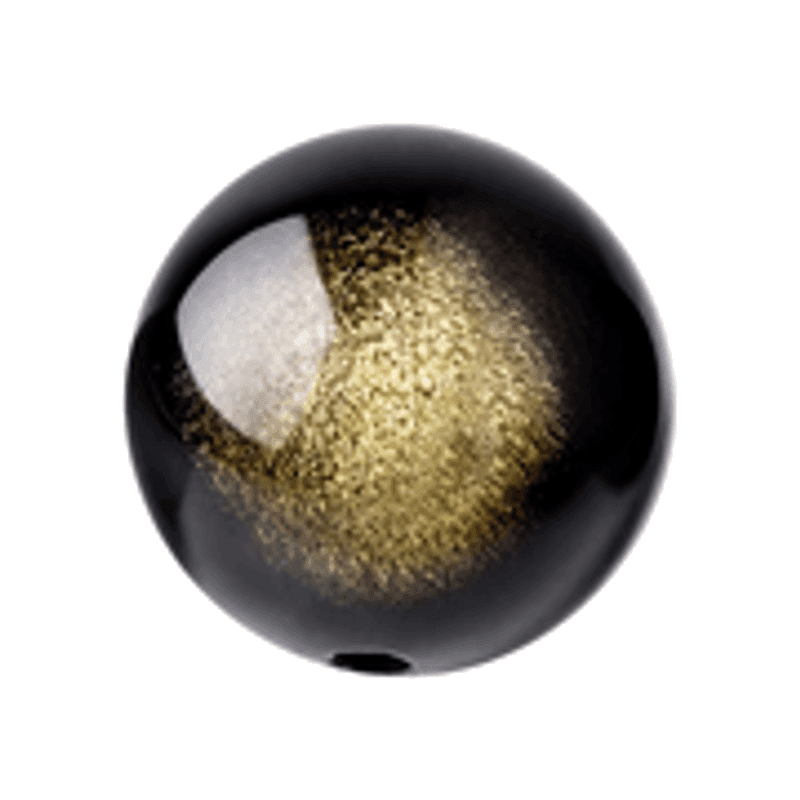
Inherits its record
Gold Sheen Obsidian
Obsidian with bubbles frozen in alignment — tilt it and a sheet of gold light travels across the face.
- Hardness
- Mohs 5–5.5
- Density
- Volcanic glass with aligned gas bubbles
- Material
- Mexico
A modern name for a natural effect. As the lava cooled it was still flowing, and microscopic gas bubbles were drawn out into parallel layers; light reflecting off them sweeps across the stone as you move it. Everything cultural belongs to obsidian, which has four thousand years of it.
Traditions recorded
Mesoamerica
c. 1200 BCE – 1521 CE
Obsidian — itztli in Nahuatl — was the cutting edge of an entire civilisation: blades, points, and the macuahuitl. Polished discs served as mirrors, and Tezcatlipoca, one of the principal Aztec gods, is named “smoking mirror” after them. A freshly struck obsidian edge is a few nanometres across, finer than surgical steel.
The Aegean
c. 12,000 – 3,000 BCE
Obsidian from the island of Melos was carried across the Aegean thousands of years before metal. Because each volcano's glass has its own chemical fingerprint, individual Neolithic blades can be matched to the outcrop they came from — early trade, mapped stone by stone.
Renaissance Europe
16th century
An Aztec obsidian mirror travelled to Europe after the conquest and ended up with John Dee, Elizabeth I's astrologer, who used it as a speculum. It is in the British Museum. The object crossed an ocean and changed meaning completely on the way — which is, in miniature, what happens to most stone lore.
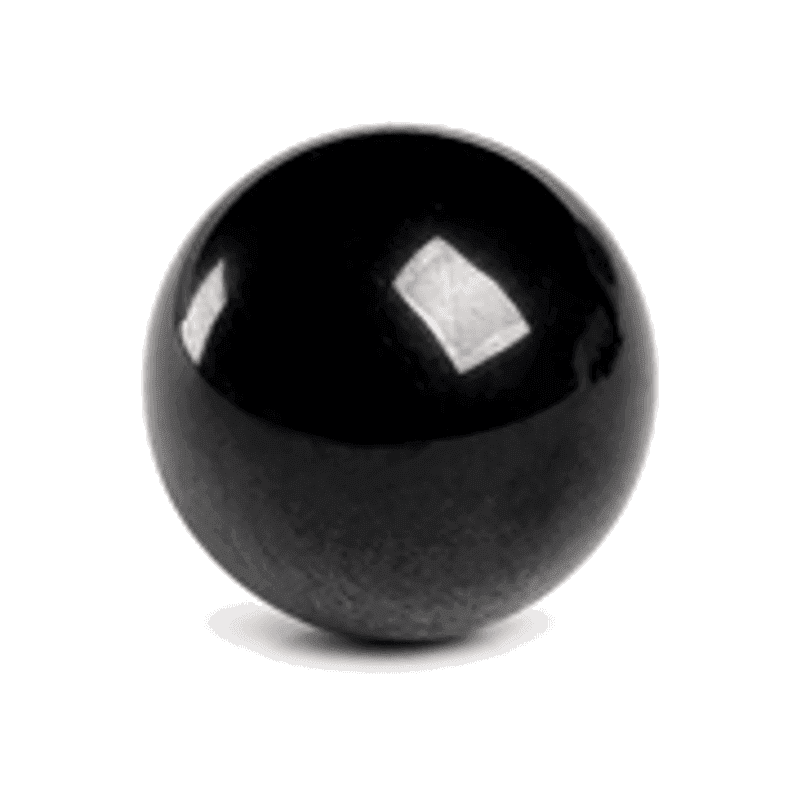
Recent record
Black Tourmaline
Dutch traders found in 1703 that a warm crystal pulls ash out of a fire — the first pyroelectric effect anyone recorded.
- Hardness
- Mohs 7–7.5
- Density
- 3.0–3.2 g/cm³
- Material
- Schorl, the iron-rich tourmaline
- Sources
- Brazil, Namibia, Sri Lanka
In 1703 Dutch traders found that a warmed tourmaline crystal pulls ash out of a fire and nicknamed it aschentrekker, ash-puller — the first recorded pyroelectric effect, and one that made the stone a laboratory instrument for eighteenth-century physicists.
Traditions recorded
Dutch East India trade
1703 onward
Traders bringing tourmaline back from Ceylon noticed that a warmed crystal attracted ash and straw, and nicknamed it aschentrekker, ash-puller. They had stumbled onto pyroelectricity. Eighteenth-century physicists took the stone up as a laboratory instrument, which makes tourmaline one of very few gems with a real place in the history of physics.
Modern crystal literature
20th century onward
The reputation black tourmaline carries today — a stone of steadiness and ward — arrived through twentieth-century crystal writing rather than from anywhere older. Its name comes from the Sinhala turamali, a catch-all word Sri Lankan traders used for the mixed coloured pebbles they sold on to Europeans.

Recent record
Black Rutilated Quartz
Clear quartz grown straight through a spray of dark needles — two minerals, one crystal, and no glue anywhere.
- Hardness
- Mohs 7
- Density
- 2.65 g/cm³
- Material
- Quartz enclosing dark needle-shaped minerals
- Sources
- Brazil, Madagascar
The dark needles were already growing when the quartz formed around them and sealed them in — a transparent record of two minerals crystallising at the same moment. Collectors have prized inclusions like these since the nineteenth century.
Traditions recorded
Mineral collecting
19th century onward
What looks like hair suspended in glass is tourmaline or a related dark mineral that was already growing when the quartz formed around it and sealed it in. Collectors have prized these since the nineteenth century for precisely that: a transparent record of two minerals growing at the same moment, frozen mid-event.
Contemporary markets
Late 20th century onward
The whole needle-in-quartz family — black, gold, green — took on its present meanings late, largely through East Asian crystal markets, where the inclusions are read as a drawing made inside the stone. A young tradition, and an unusually visual one.
03
Red
Documented record
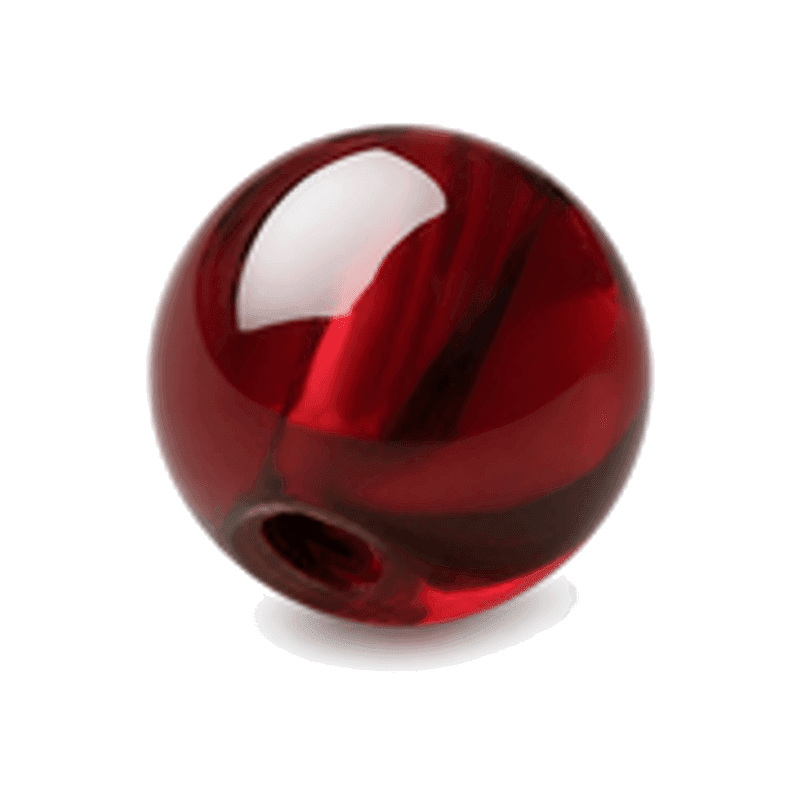
Garnet
Latin granatum, pomegranate — and the stone that seventh-century Suffolk imported from the Indian Ocean.
- Hardness
- Mohs 7–7.5
- Density
- 3.5–4.3 g/cm³
- Material
- A mineral group, not one species
- Sources
- India, Sri Lanka, Bohemia, Mozambique
Latin granatum, pomegranate, for the resemblance to the seeds. Medieval lapidaries called the bright reds carbuncles, “little coals”, and said they glowed in the dark; the Sutton Hoo goldwork is set with hundreds of paper-thin garnet plates traced to India and Sri Lanka.
Traditions recorded
Medieval Europe
11th – 15th century
Latin granatum, pomegranate: the seeds are the resemblance. Medieval lapidaries call the bright reds carbunculus, little coal, and describe them as glowing in the dark. Marbode of Rennes' verse lapidary, copied across Europe for four hundred years, puts the carbuncle at the head of the red stones.
Early medieval northern Europe
6th – 8th century
The shoulder-clasps and purse-lid from Sutton Hoo are set with hundreds of paper-thin garnet plates over patterned gold foil, cut to fit cloisons the width of a thread. Analysis has traced the stones to India and Sri Lanka. Seventh-century Suffolk, supplied from the Indian Ocean.
Vedic gem lore
Classical, still practised
In Jyotish, hessonite garnet — gomed — is one of the nine stones of the navaratna, assigned to Rahu. As always in that system it is prescribed against an individual chart rather than chosen by preference, and the nine are often set together in a single ring.
Documented record
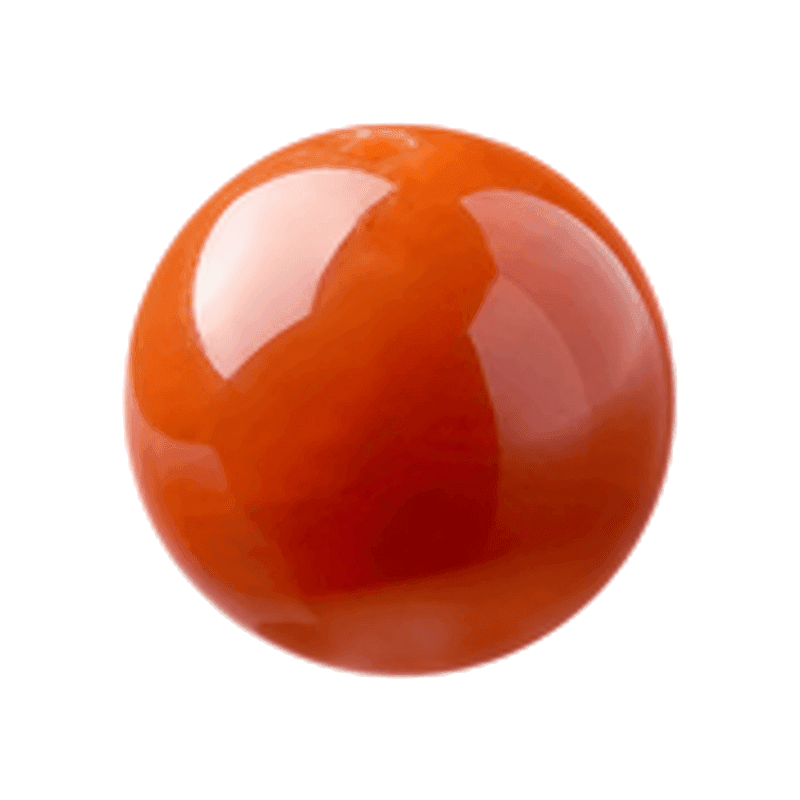
Red Agate
Pliny says agate was first found beside a Sicilian river; the red end of the family has been an amulet stone for five thousand years.
- Hardness
- Mohs 6.5–7
- Density
- 2.60 g/cm³
- Material
- Banded chalcedony
- Sources
- Brazil, India, Botswana
Pliny says agate was first found beside the river Achates in Sicily and named for it. The red end of the family — carnelian — was among the ancient world's most-used amulet stones, and the Islamic aqiq ring, usually carnelian, has been worn continuously since the seventh century.
Traditions recorded
Greek and Roman
1st century CE
Pliny reports that agate was first found beside the river Achates in Sicily and took its name from it. The banding that makes agate recognisable is silica laid down in successive layers inside a gas cavity in lava — sometimes over a very long time, each band a separate episode.
Pliny, Naturalis Historia, Book 37
Ancient Egypt and the Near East
c. 3000 BCE onward
Carnelian, the clear red end of the same family, was among the most-used amulet stones of the ancient world. The Egyptian tyet — the knot of Isis — was specified in red, and long carnelian beads from the Indus valley turn up in Mesopotamian graves, which is one of the oldest long-distance bead trades we can trace.
Islamic tradition
7th century – present
The aqiq ring, usually carnelian, is worn in emulation of the Prophet; the practice is recorded in hadith and remains common from Morocco to Iran today. It is one of the longest continuously observed stone customs anywhere in the world.
Recent record
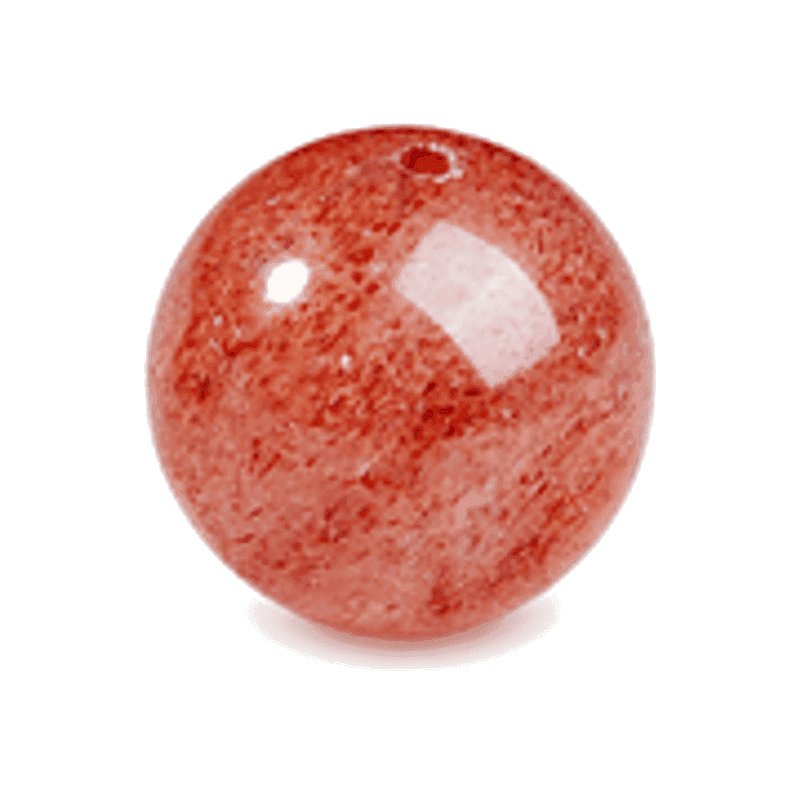
Strawberry Quartz
Quartz seeded with red mineral flecks — a recent name for an entirely natural effect.
- Hardness
- Mohs 7
- Density
- 2.65 g/cm³
- Material
- Quartz with red iron-mineral flecks
- Sources
- Kazakhstan, Mexico, Brazil
The red flecks are hematite or fine goethite, scattered through the quartz as it grew. The name is a late-twentieth-century one, and no older tradition uses it — this is a stone people choose by eye, and whatever it comes to mean is being decided now.
Traditions recorded
Trade naming
Late 20th century
“Strawberry quartz” is a market name coined in the late twentieth century for quartz carrying red inclusions — usually hematite, lepidocrocite or very fine goethite, scattered through the crystal as it grew. No older tradition uses the name, for the simple reason that the name did not exist.
Contemporary practice
Present
It belongs to the group of stones people choose by eye rather than by lore. Whatever it comes to mean is being decided right now, by the people who wear it — which is how every older tradition on this page started out.
04
Pink
Recent record
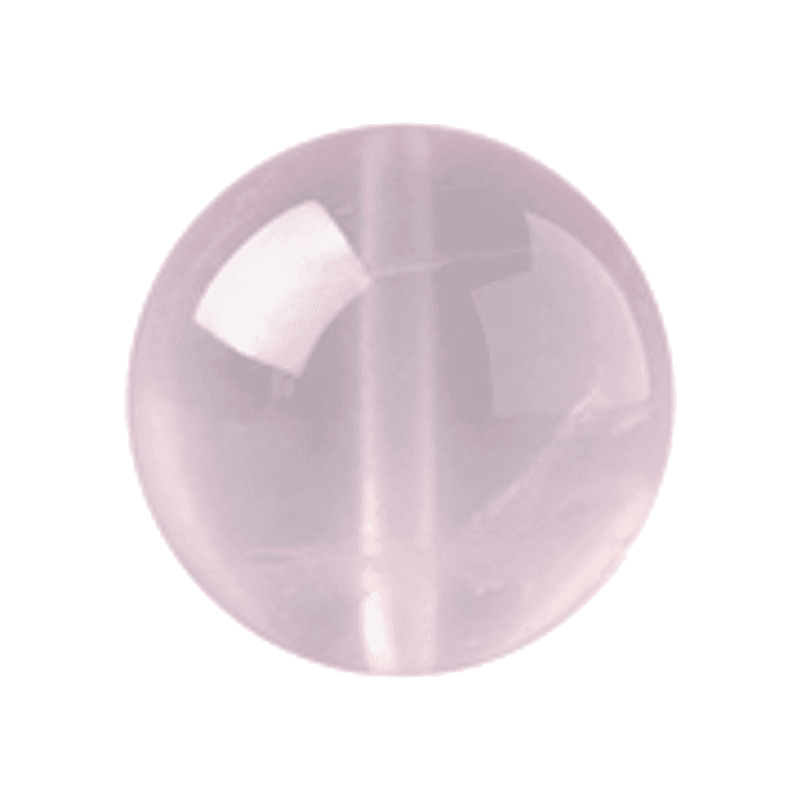
Rose Quartz
Assyrian and Roman workshops were cutting it three thousand years ago; what it means today, we made ourselves.
- Hardness
- Mohs 7
- Density
- 2.65 g/cm³
- Material
- Quartz, pink from microscopic mineral fibres
- Sources
- Brazil, Madagascar
People have been cutting rose quartz for three thousand years — beads survive from Assyrian and Roman contexts — but no ancient source records what they thought it meant. The pink comes from microscopic mineral fibres, which is also why so much of it is milky rather than clear.
Traditions recorded
The ancient Near East and Rome
c. 800 BCE onward
Rose quartz beads appear in Assyrian contexts and later Roman ones, so people have been working this stone for the best part of three thousand years. What does not survive is any statement of what they thought it meant. The objects outlasted the reasons — which is true of far more ancient jewellery than most lore admits.
Modern usage
20th century onward
The association with affection and gentleness is a twentieth-century arrival, and it has taken hold firmly enough to count as a tradition in its own right. The colour itself comes from microscopic fibres of a mineral related to dumortierite, which is also why so much rose quartz is milky rather than clear — the cloudiness and the pink are the same fact.

Recent record
Kunzite
Named in 1902 for Tiffany's chief gemmologist — one of the very few stones whose whole history is on the record.
- Hardness
- Mohs 6.5–7
- Density
- 3.15–3.20 g/cm³
- Material
- Spodumene, a lithium silicate
- Sources
- Afghanistan, Brazil, California
Named in 1902 for George Frederick Kunz, Tiffany's chief gemmologist, from crystals found at Pala in California — so we know exactly who found it, where and when. It is strongly pleochroic: the pink deepens and lightens depending on which way you look through it.
Traditions recorded
Naming
1902
Pink spodumene from Pala, California, reached George Frederick Kunz, Tiffany & Co.'s gem buyer and the most influential gemmologist of his generation; Charles Baskerville named the stone for him in 1902. Because it was described so late, we know exactly who found it, where and when — which almost no older gemstone can claim.
Modern usage
20th century onward
Kunzite is strongly pleochroic: the same stone shows a different depth of pink depending on which direction you look through it, so cutters orient it carefully to put the best colour up the table. Its meanings, like its name, belong to the twentieth century.
05
Brown
Documented record
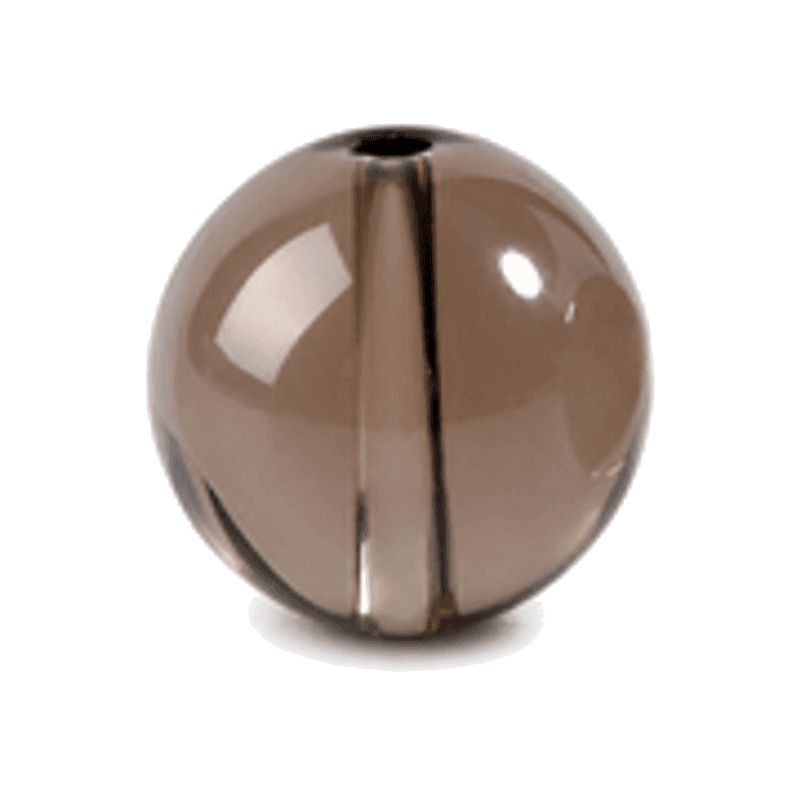
Smoky Quartz
Scotland's cairngorm — set into dirk hilts and Highland dress, and the only quartz with a national costume.
- Hardness
- Mohs 7
- Density
- 2.65 g/cm³
- Material
- Quartz darkened by natural radiation
- Sources
- Scotland, Swiss Alps, Brazil
Smoky quartz from the Cairngorms gave the stone its Scottish name, set into dirk pommels and the brooches of Highland dress. The colour is not an impurity but a record: natural radiation from the surrounding rock displaces electrons in the lattice and the crystal slowly darkens.
Traditions recorded
Scotland
18th – 19th century
Smoky quartz from the Cairngorm mountains gave the stone its Scottish name. It was set into the pommels of dirks and sgian-dubhs and into the brooches of Highland dress, and the Victorian enthusiasm for all things Scottish turned a local mineral into a national emblem. Queen Victoria's Balmoral collecting did the rest.
Alpine mineral collecting
18th century onward
The colour is not an impurity you can point at. Natural radiation from the surrounding rock displaces electrons in the quartz lattice, and the crystal darkens over geological time — a stone that records the radioactivity of the ground it grew in. Alpine strahlers have hunted the darkest grade, morion, out of high clefts since the 1700s.
06
Yellow
Recent record
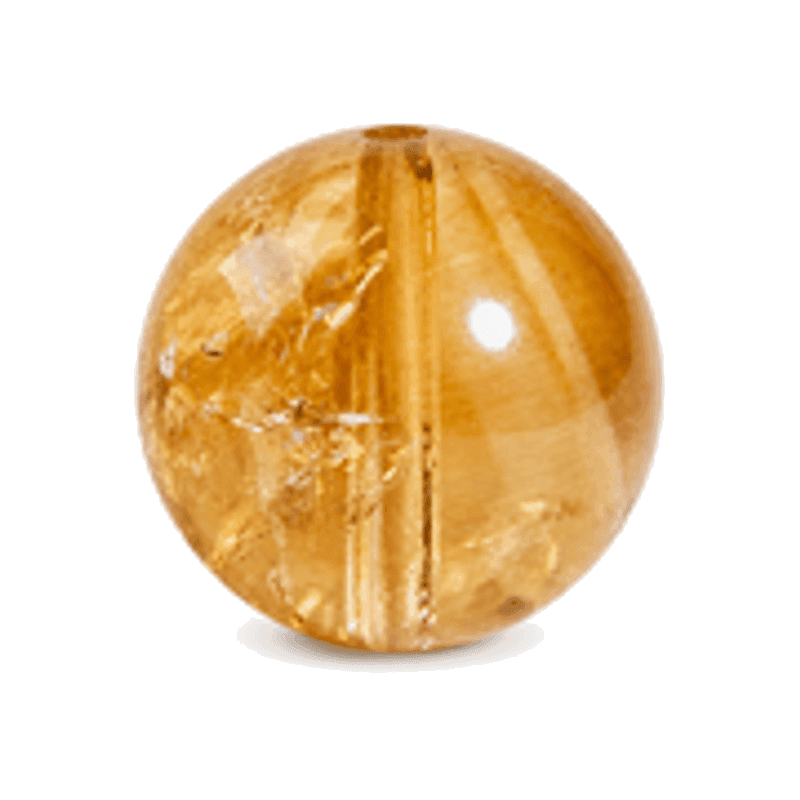
Citrine
Named for the lemon around 1550, and the warmest colour quartz will give you.
- Hardness
- Mohs 7
- Density
- 2.65 g/cm³
- Material
- Quartz, yellow to orange
- Sources
- Brazil, Bolivia, Zambia
The name arrives around 1550, from the French citrin, lemon-coloured — late, because naturally yellow quartz is uncommon. Citrine stayed a minor stone until the Art Deco period, when big golden quartz became the signature of cocktail jewellery.
DisclosureMost citrine on the market, ours included where noted, is amethyst heat-treated to yellow. The process is standard in the gem trade, and the colour is stable and permanent. Naturally yellow citrine is uncommon and priced accordingly.
Traditions recorded
European naming
c. 1550
The English word appears in the mid sixteenth century, from the French citrin, lemon-coloured. Naturally yellow quartz is genuinely uncommon, which is why the name arrives so late — and why citrine stayed a minor stone until the Art Deco period, when large golden quartz became the signature of cocktail jewellery.
Modern crystal literature
20th century onward
“The merchant's stone” is a twentieth-century trade phrase, built on the plain colour association between yellow and gold. Recent — and we would rather say so than reach for a Roman source that is not there.
Recent record
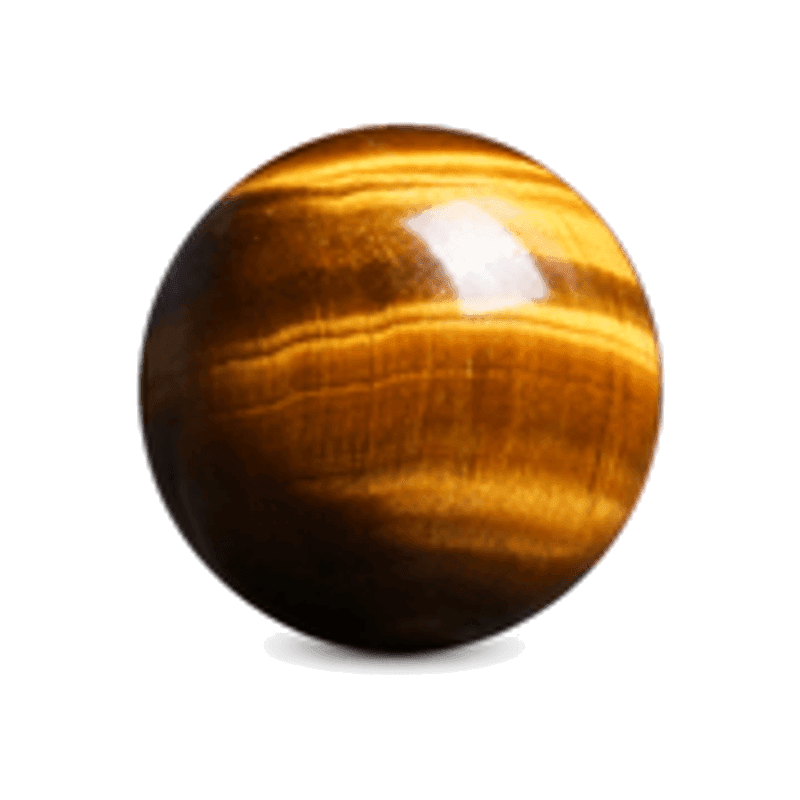
Tiger Eye
A band of light that moves when you do — South Africa's contribution to the world's jewellery boxes.
- Hardness
- Mohs 7
- Density
- 2.64–2.71 g/cm³
- Material
- Quartz that has replaced parallel crocidolite fibres
- Sources
- Griqualand West, South Africa
Tiger eye reached European markets from Griqualand West in the 1800s. The moving band is chatoyancy: quartz has replaced parallel fibres of crocidolite and still follows their direction exactly, so the light tracks you as you move.
Traditions recorded
South Africa
19th century onward
Tiger eye came out of Griqualand West and reached European markets in the 1800s. It was briefly expensive; once the scale of the deposits was understood it became the stone almost everyone has owned at least once. The moving band is chatoyancy — quartz has replaced parallel fibres of crocidolite and still follows their direction exactly.
The eye as a motif
Ancient, and near-universal
The eye is one of the oldest motifs in ornament anywhere: Mesopotamian eye beads, the Egyptian wedjat, the Turkish nazar. Tiger eye is a young stone that landed squarely inside a very old visual tradition — which is a better story than the one about Roman soldiers carrying it, for which we have found no classical source and which the South African dates make difficult.
Recent record
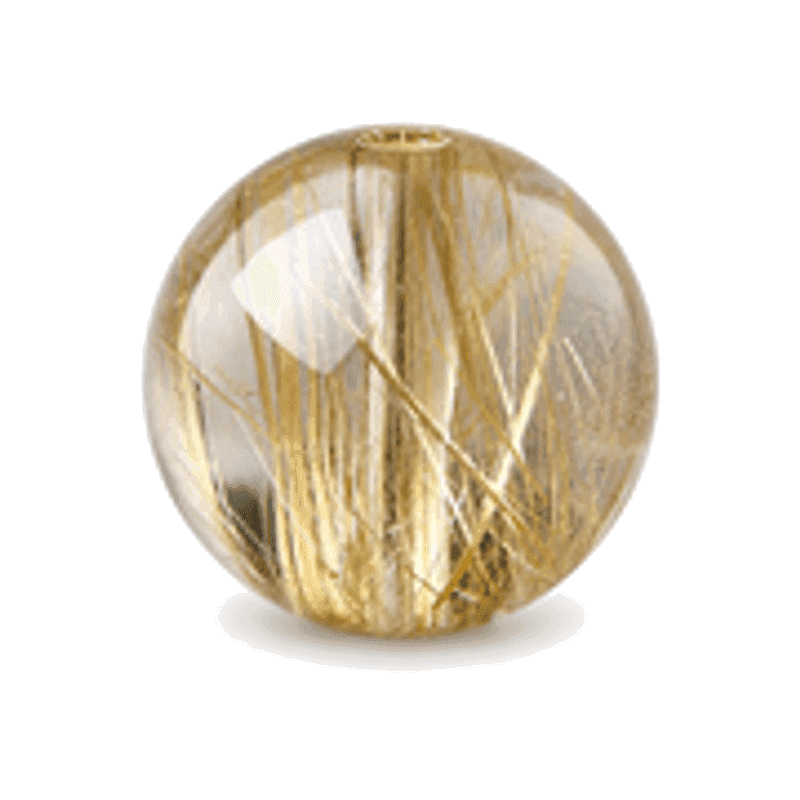
Golden Rutilated Quartz
Europe called these needles Venus's hair; the French called them arrows of love. They are titanium dioxide.
- Hardness
- Mohs 7
- Density
- 2.65 g/cm³
- Material
- Quartz enclosing rutile (titanium dioxide) needles
- Sources
- Minas Gerais, Brazil
European mineralogists named these inclusions before they understood them — cheveux de Vénus, Venus's hair, and in French fléches d'amour, arrows of love. The needles are rutile: they crystallised first, and the quartz grew around them and sealed them in place.
Traditions recorded
European mineralogy
17th century onward
Cheveux de Vénus, Venushaar, fléches d'amour — Europe had names for these inclusions long before it had any theory of how they formed. The needles are rutile, titanium dioxide; they crystallised first, and the quartz grew around them and sealed them in place, which is why they look suspended rather than embedded.
Chinese-speaking markets
1990s onward
The association with prosperity belongs to the Hong Kong and Taiwanese trade from the 1990s, where golden needles are read straightforwardly as threads of gold inside the stone. Recent, regional, and genuinely a tradition — it is where most people who go looking for this stone first heard of it.

Inherits its record
Yellow Agate
Agate in a honey key — the same banded chalcedony, a different iron.
- Hardness
- Mohs 6.5–7
- Density
- Banded chalcedony
- Material
- Brazil, India
The colour comes from iron oxides carried in with the silica as it filled a cavity in cooling lava, band by band. Agate's record is long and begins with Pliny's Sicilian river, and it belongs to agate as a whole rather than to any one colour of it.
Traditions recorded
Greek and Roman
1st century CE
Pliny reports that agate was first found beside the river Achates in Sicily and took its name from it. The banding that makes agate recognisable is silica laid down in successive layers inside a gas cavity in lava — sometimes over a very long time, each band a separate episode.
Pliny, Naturalis Historia, Book 37
Ancient Egypt and the Near East
c. 3000 BCE onward
Carnelian, the clear red end of the same family, was among the most-used amulet stones of the ancient world. The Egyptian tyet — the knot of Isis — was specified in red, and long carnelian beads from the Indus valley turn up in Mesopotamian graves, which is one of the oldest long-distance bead trades we can trace.
Islamic tradition
7th century – present
The aqiq ring, usually carnelian, is worn in emulation of the Prophet; the practice is recorded in hadith and remains common from Morocco to Iran today. It is one of the longest continuously observed stone customs anywhere in the world.
Inherits its record
Lemon Quartz
A bright, almost green-edged yellow that quartz rarely reaches on its own.
- Hardness
- Mohs 7
- Density
- Quartz
- Material
- Brazil
A modern name for quartz brought to a clear lemon yellow, normally by heat and irradiation — an established, permanent gem-trade process, disclosed on every product page. The cultural record belongs to quartz, which the Greeks were already naming after ice.
DisclosureLemon quartz is quartz brought to this colour by heat and irradiation. Both are established gem-trade processes, the colour is permanent, and we state it on every affected product page.
Traditions recorded
Greek and Roman
1st century CE
Krystallos is simply the Greek word for ice. Pliny passes on the belief that rock crystal was water frozen over ages in Alpine cold, and reports that Nero, in a temper, smashed two crystal cups rather than leave them for anyone else. The word “crystal”, in every European language, descends from that mistaken guess.
Pliny, Naturalis Historia, Book 37
Buddhist practice, East Asia
Classical, still practised
Chinese and Japanese usage both name it for water — shuijing, suishō — and it appears in scriptural lists of the seven treasures. It is a standard material for prayer beads in both traditions, chosen partly because a clear bead shows dirt and therefore shows care.
Early modern Europe
16th – 17th century
Polished rock-crystal spheres were the working equipment of European scrying. John Dee kept one at Elizabeth I's court, and it sits in the British Museum today. Every fortune-teller's crystal ball in every later painting and film descends directly from objects like it.
07
Blue
Documented record
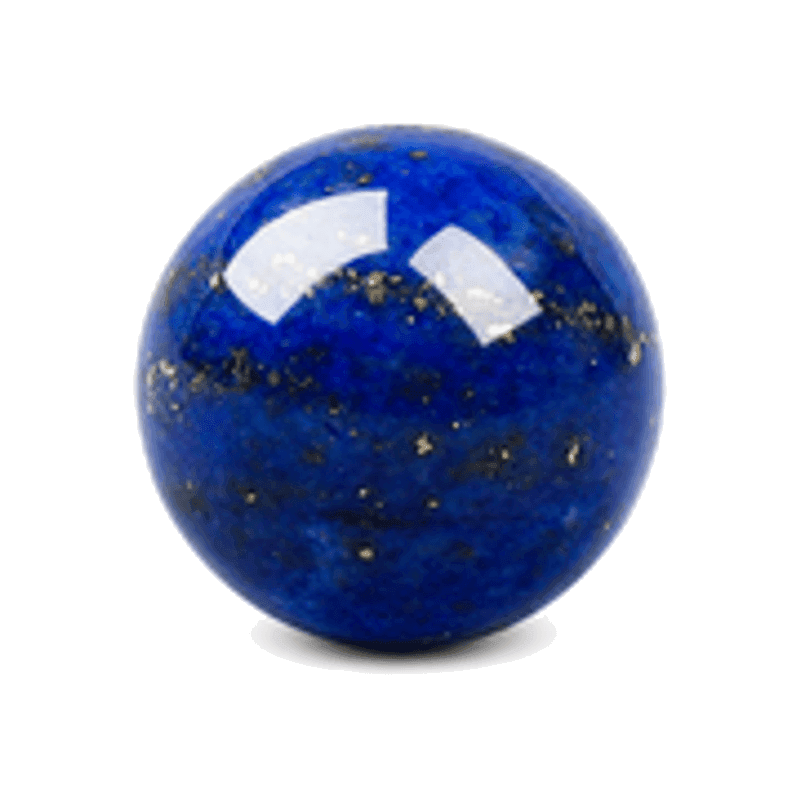
Lapis Lazuli
Carried 2,500 km from one Afghan valley to Sumer by 2600 BCE — the world's first long-distance luxury trade.
- Hardness
- Mohs 5–6
- Density
- 2.7–2.9 g/cm³
- Material
- A rock, not a mineral — lazurite with pyrite and calcite
- Sources
- Sar-e-Sang, Badakhshan, Afghanistan
By 2600 BCE lapis was being carried 2,500 km from one Afghan valley to the royal graves of Ur — the earliest evidence that a stone could be worth opening a trade route for. Egyptian burial practice placed it at the throat of the dead, and ground lapis later became ultramarine, the most expensive blue in European painting.
Traditions recorded
Ancient Egypt
c. 3000 – 30 BCE
Egyptian burial practice placed lapis at the throat and chest of the dead. Funerary texts of the New Kingdom specify a heart scarab and, in certain spells, an amulet of lapis; the stone was associated with the night sky and with the goddess Nut. Tutankhamun's mask uses it as the inlay around the eyes and across the nemes headdress.
Book of the Dead, spells 30B and 140 · Cairo JE 60672
Mesopotamia
c. 2600 BCE
The Royal Cemetery at Ur produced lapis beads, seals and inlay in quantity, all of it carried some 2,500 km from Badakhshan. It is the earliest clear evidence that a stone could be worth opening a trade route for. Sumerian literature uses lapis as its standard simile for anything precious.
Woolley, Ur Excavations II, 1934
European painting
14th – 18th century
Ground lapis was the source of ultramarine, and Italian Renaissance contracts priced the pigment separately from the painter's fee — which is why the Virgin's robe is blue in so many altarpieces. The colour's value came straight from the stone's scarcity, and the journey it had already made.

Documented record
Turquoise
Mined in Sinai for a goddess called Lady of Turquoise, and worn ever since from Tibet to New Mexico.
- Hardness
- Mohs 5–6
- Density
- 2.6–2.8 g/cm³
- Material
- Hydrated copper aluminium phosphate
- Sources
- Iran, Arizona, China
Egyptian expeditions worked the Sinai mines from the Old Kingdom and built a temple there to Hathor, Lady of Turquoise; their inscriptions are still on the rock. The English name records the route, not the source — French pierre turquoise, “Turkish stone”, because that is how Persian material reached Europe.
DisclosureTurquoise is porous and much of what is sold, ours included where noted, is stabilised — impregnated with resin so the colour holds and the stone can be cut. This is standard practice for all but the finest material, and we state it per product.
Traditions recorded
Ancient Egypt
c. 2600 BCE onward
Egyptian expeditions worked the Sinai mines at Serabit el-Khadim from the Old Kingdom onward and built a temple there to Hathor in her aspect as Lady of Turquoise. The inscriptions the mining parties left are still on the rock, naming the officials who led each season.
Persia and the Islamic world
10th century onward
Persian turquoise from Nishapur set the standard the trade still measures against, and the English name records the route rather than the source: French pierre turquoise, “Turkish stone”, because that is how it reached Europe. Across Iran and Central Asia it is architecture as much as jewellery — domes, tilework, inlay.
The American Southwest
c. 900 CE – present
Turquoise has been mined in what is now New Mexico and Arizona for well over a thousand years; Cerrillos turquoise reached Chaco Canyon in quantity. Zuni, Navajo and Hopi silverwork made it, in the twentieth century, one of the most recognisable regional jewellery styles anywhere in the world.

Documented record
Aquamarine
Aqua marina, sea water — and the beryl family gave Europe its word for spectacles.
- Hardness
- Mohs 7.5–8
- Density
- 2.68–2.74 g/cm³
- Material
- Beryl, Be₃Al₂Si₆O₁₈
- Sources
- Minas Gerais, Brazil; Pakistan
Aqua marina, sea water: classical writers grouped it with the beryls and connected it to safe voyages. Clear beryl was also cut into Europe's first reading lenses, which is why the German word for spectacles is still Brille. March birthstone since 1912.
Traditions recorded
Greek and Roman
1st century CE
Aqua marina, sea water. Classical writers group it with the beryls and connect it to the sea, and the association with safe voyages is repeated from antiquity onward. Clear beryl was also cut into the first European reading lenses, which is why the German word for spectacles is still Brille.
Brazil
20th century
In 1910 a crystal weighing some 110 kg was taken from a Minas Gerais pegmatite — over a metre long, clear enough to read through, and cut into hundreds of finished stones. Aquamarine grows big and grows clean, which is why it is one of the few gems regularly seen in very large sizes.
Birthstone lists
1912 onward
March, in the list agreed by the American National Association of Jewelers in 1912. That list began as a trade convention and has since become a genuine popular custom — a tradition we can watch being made, with a date on it.

Inherits its record
Blue Moonstone
Moonstone selected for the blue end of the glow — the sheen that made the stone famous in the first place.
- Hardness
- Mohs 6–6.5
- Density
- Feldspar
- Material
- Sri Lanka, India
A grading term rather than a species: feldspar whose internal layering happens to scatter light toward the blue. The thinner the layers, the bluer the sheen, so the finest blue is a matter of a few nanometres. Everything cultural belongs to moonstone.
Traditions recorded
Greek and Roman
1st century CE
Pliny records the Roman name selenites and the belief that the stone waxed and waned with the moon. What they were describing is real optics: adularescence, light scattering off microscopically thin layers of two feldspars that grew into each other as the crystal cooled. It is one of the few ancient stone beliefs that turns out to be an accurate description of the thing in front of them.
Pliny, Naturalis Historia, Book 37
Vedic gem lore
Classical, still practised
In Jyotish the Moon's stone is the pearl, and moonstone — chandrakanta, “beloved of the moon” — is its accepted substitute, given on Mondays. In India it has long been a customary gift between lovers, which is the part of the tradition most visitors actually meet.
Art Nouveau
1890 – 1914
René Lalique and his contemporaries used moonstone constantly. Its soft, unfaceted glow suited a generation of jewellers who had tired of brilliance and wanted light that moved slowly. If a piece from 1900 looks lit from the inside, this is usually the stone doing it.

Inherits its record
Blue Tiger Eye
Hawk's eye — the same stone as tiger eye, caught one chemical step earlier.
- Hardness
- Mohs 7
- Density
- Quartz after crocidolite
- Material
- South Africa
Tiger eye starts out blue-grey. Iron in the fibres oxidises to golden brown over geological time, and hawk's eye is simply the material that never made that journey. Same deposits, same chatoyancy, same recent history.
Traditions recorded
South Africa
19th century onward
Tiger eye came out of Griqualand West and reached European markets in the 1800s. It was briefly expensive; once the scale of the deposits was understood it became the stone almost everyone has owned at least once. The moving band is chatoyancy — quartz has replaced parallel fibres of crocidolite and still follows their direction exactly.
The eye as a motif
Ancient, and near-universal
The eye is one of the oldest motifs in ornament anywhere: Mesopotamian eye beads, the Egyptian wedjat, the Turkish nazar. Tiger eye is a young stone that landed squarely inside a very old visual tradition — which is a better story than the one about Roman soldiers carrying it, for which we have found no classical source and which the South African dates make difficult.
Recent record
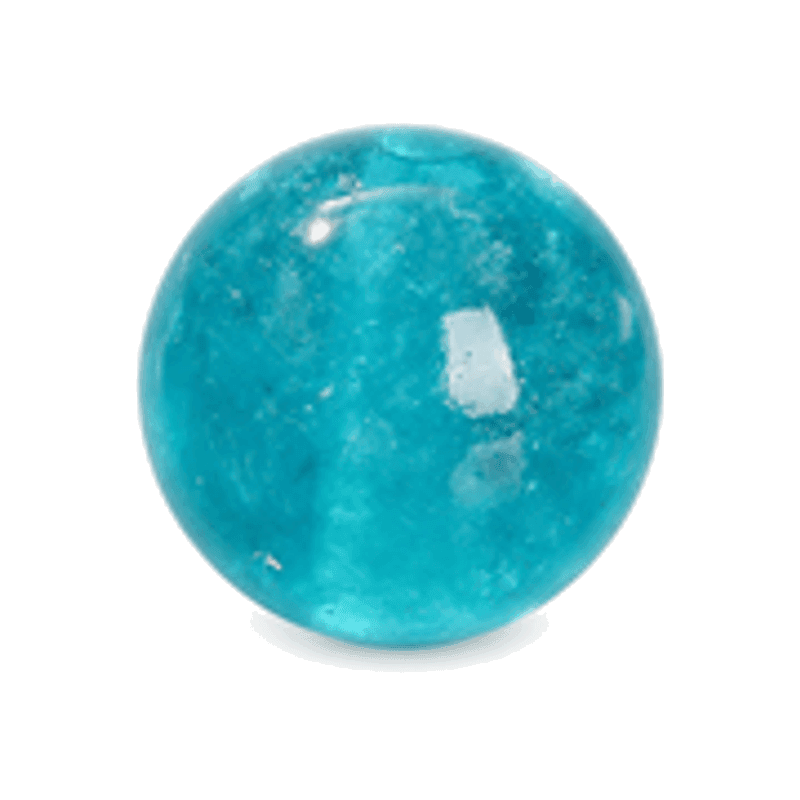
Blue Chalcedony
There is no blue pigment in it — the colour is the same physics that makes the sky blue.
- Hardness
- Mohs 6.5–7
- Density
- 2.58–2.64 g/cm³
- Material
- Cryptocrystalline quartz
- Sources
- Namibia, Turkey, Oregon
There is no blue colourant in blue chalcedony. The colour is Rayleigh scattering off silica fibres finer than the wavelength of light — the same physics that makes the daytime sky blue. Hold it against a bright light and the blue drops out entirely.
Traditions recorded
Mineralogy
Understood in the 20th century
Blue chalcedony contains no blue colourant at all. The colour is Rayleigh scattering off silica fibres finer than the wavelength of visible light — exactly the effect that makes the daytime sky blue. Hold a piece against a bright light and the blue drops out, leaving a warm grey.
Modern usage
20th century onward
Chalcedony as a material is ancient; blue chalcedony as a named stone with a following is recent, reaching the trade from Namibia, Turkey and Oregon during the twentieth century. Its associations with calm and plain speaking date from the same period.

Recent record
Larimar
Found in one valley in the Dominican Republic, and nowhere else on earth.
- Hardness
- Mohs 4.5–5
- Density
- 2.7–2.9 g/cm³
- Material
- Blue pectolite
- Sources
- Barahona, Dominican Republic — the only source
Larimar was traced in 1974 up the Bahoruco river to a single outcrop in the Dominican mountains, and that outcrop is still the only commercial source on earth. Miguel Méndez named it for his daughter Larissa and the sea.
Traditions recorded
Dominican Republic
1974
Blue pectolite was brought to wider attention in 1974 by Miguel Méndez and Peace Corps volunteer Norman Rilling, who followed blue pebbles up the Bahoruco river to a single outcrop in the mountains. Méndez named it Larimar, from his daughter Larissa and mar, the sea. That outcrop is still the only commercial source known.
Contemporary practice
1974 – present
Larimar has no ancient lore because it had no ancient trade. What it has instead is unusually well documented: a discoverer, a date, a named river, and a reputation as a stone of the sea that was made within living memory, on one island, by the people living on it.
08
Green
Recent record
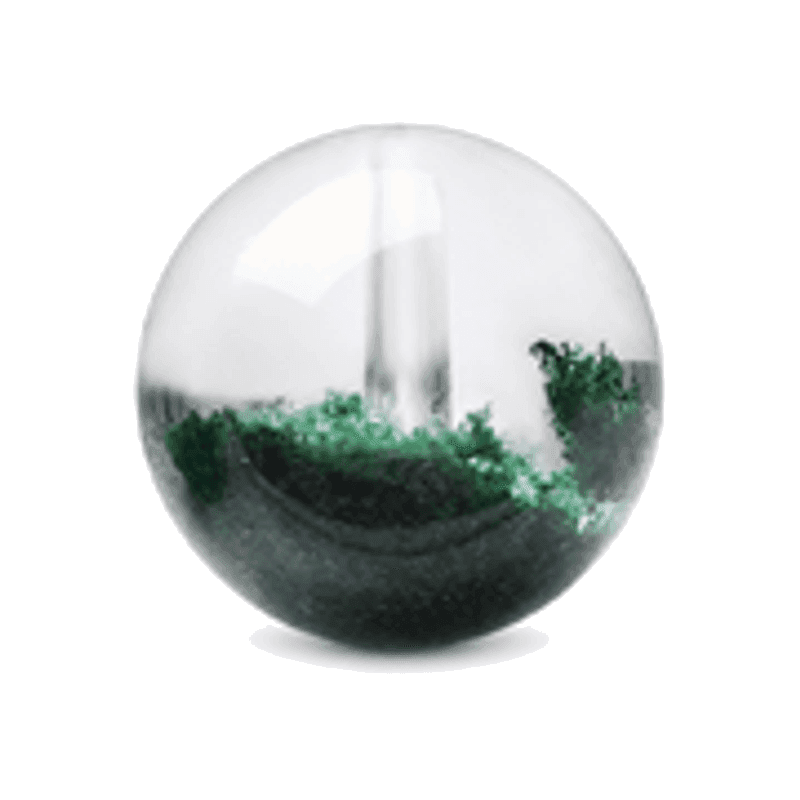
Green Phantom Quartz
A whole crystal, complete and sealed, standing inside a second crystal that grew around it.
- Hardness
- Mohs 7
- Density
- 2.65 g/cm³
- Material
- Quartz enclosing an earlier quartz crystal coated in chlorite
- Sources
- Minas Gerais, Brazil
A phantom is a pause: the crystal stopped growing, a film of chlorite settled on its faces, then growth resumed and sealed the whole earlier crystal inside the new one. In the Hong Kong and Taiwanese trade from the 1990s, that inner shape came to be read as a mountain standing inside the stone.
Traditions recorded
What a phantom is
Mineralogy
A phantom is a pause. The crystal stopped growing; a film of chlorite settled on its faces; then growth resumed and enclosed the whole earlier crystal, outline intact, inside the new one. What you are holding is a crystal with its own younger self visible inside it — and the pause is legible because the green marks exactly where it happened.
Chinese-speaking markets
1990s onward
The association with career and enterprise belongs to the Hong Kong and Taiwanese crystal trade from the 1990s, where the inclusion is read as a mountain standing inside the stone, and green as the colour of growth. It is a recent tradition and a regional one — and it is the reason most people come looking for this stone at all.
Inherits its record
Green Quartz
Prasiolite — amethyst taken to a soft leaf green, and one of the quieter colours quartz can hold.
- Hardness
- Mohs 7
- Density
- Quartz (prasiolite)
- Material
- Rio Grande do Sul, Brazil
Almost all prasiolite begins as amethyst from a small number of Brazilian deposits and is brought to green by heat; the process was commercialised in the 1950s and the colour is permanent. Naturally green prasiolite exists and is rare. The record belongs to amethyst.
DisclosureOur green quartz is prasiolite: amethyst brought to green by heat, a process commercialised in the 1950s. The colour is permanent, and naturally green material is rare enough that we would price it separately.
Traditions recorded
Greek and Roman
c. 4th century BCE – 1st century CE
The name is Greek: amethystos, not drunken. Classical writers record the belief that the stone resisted intoxication, and drinking vessels were cut from it on that basis. Pliny reports the belief and is openly sceptical of it, calling the promises attached to it the inventions of the magi — which makes this one of the earliest pieces of consumer scepticism on record.
Pliny, Naturalis Historia, Book 37
Christian Europe
Medieval – present
Amethyst became the conventional stone of a bishop's ring in the Western church, a usage still current today. Medieval lapidaries — the compiled stone-books of the period, of which Marbode of Rennes' is by far the most copied — carry the classical association with sobriety forward into a Christian frame.
Vedic gem lore
Classical, still practised
In Jyotish, amethyst (jamunia) serves as an uparatna — a secondary stone standing in for blue sapphire, the stone of Saturn. Which stone is prescribed depends on an individual chart rather than on preference; the tradition has never treated gems as generally applicable, which is worth knowing before anyone quotes it at you.
09
Purple
Inherits its record
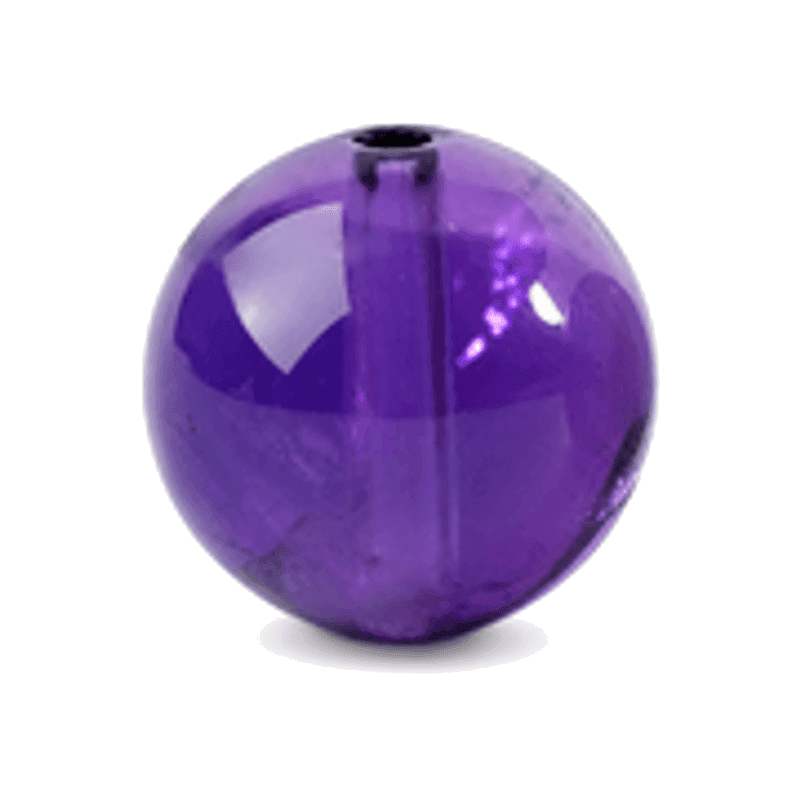
Uruguay Amethyst
Amethyst from the Artigas basalts — graded for the deepest, most even purple the species reaches.
- Hardness
- Mohs 7
- Density
- Quartz (amethyst)
- Material
- Artigas, Uruguay
Uruguayan geodes formed in ancient lava flows along the Brazilian border, and the trade grades them for saturation: the darkest commercial amethyst usually comes from here. The name describes where it grew, not what it is.
Traditions recorded
Greek and Roman
c. 4th century BCE – 1st century CE
The name is Greek: amethystos, not drunken. Classical writers record the belief that the stone resisted intoxication, and drinking vessels were cut from it on that basis. Pliny reports the belief and is openly sceptical of it, calling the promises attached to it the inventions of the magi — which makes this one of the earliest pieces of consumer scepticism on record.
Pliny, Naturalis Historia, Book 37
Christian Europe
Medieval – present
Amethyst became the conventional stone of a bishop's ring in the Western church, a usage still current today. Medieval lapidaries — the compiled stone-books of the period, of which Marbode of Rennes' is by far the most copied — carry the classical association with sobriety forward into a Christian frame.
Vedic gem lore
Classical, still practised
In Jyotish, amethyst (jamunia) serves as an uparatna — a secondary stone standing in for blue sapphire, the stone of Saturn. Which stone is prescribed depends on an individual chart rather than on preference; the tradition has never treated gems as generally applicable, which is worth knowing before anyone quotes it at you.
Inherits its record
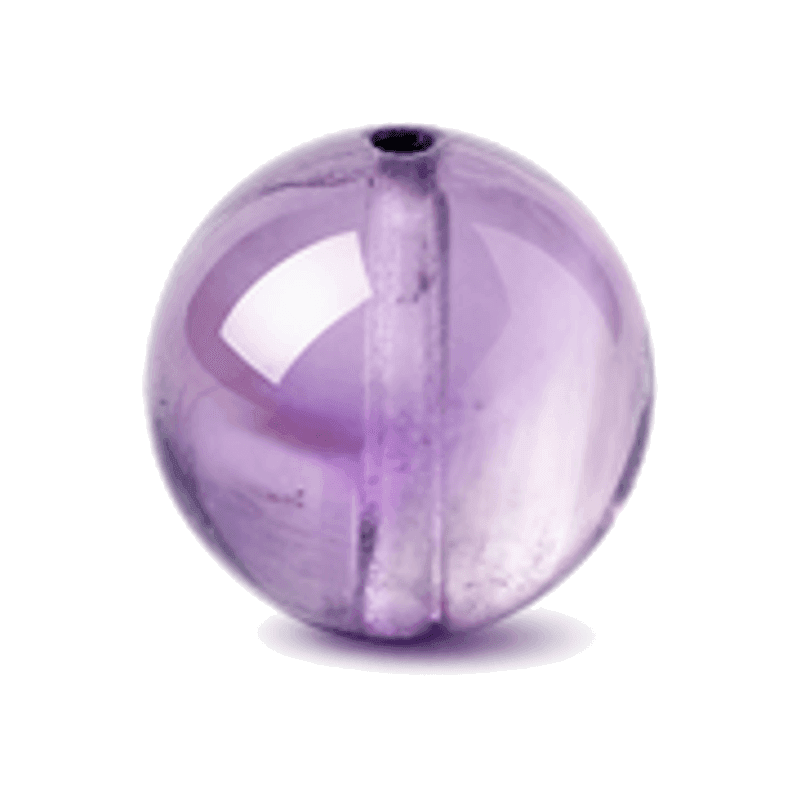
Brazilian Amethyst Tower
Amethyst cut as a standing point — Brazil's geodes are big enough to make it worth doing.
- Hardness
- Mohs 7
- Density
- Quartz (amethyst), cut as a standing point
- Material
- Minas Gerais / Rio Grande do Sul
Minas Gerais and Rio Grande do Sul produce amethyst geodes measured in metres. The tower is a modern cutting style that shows off crystal length rather than colour depth, so it is a cut and an origin rather than a species.
Traditions recorded
Greek and Roman
c. 4th century BCE – 1st century CE
The name is Greek: amethystos, not drunken. Classical writers record the belief that the stone resisted intoxication, and drinking vessels were cut from it on that basis. Pliny reports the belief and is openly sceptical of it, calling the promises attached to it the inventions of the magi — which makes this one of the earliest pieces of consumer scepticism on record.
Pliny, Naturalis Historia, Book 37
Christian Europe
Medieval – present
Amethyst became the conventional stone of a bishop's ring in the Western church, a usage still current today. Medieval lapidaries — the compiled stone-books of the period, of which Marbode of Rennes' is by far the most copied — carry the classical association with sobriety forward into a Christian frame.
Vedic gem lore
Classical, still practised
In Jyotish, amethyst (jamunia) serves as an uparatna — a secondary stone standing in for blue sapphire, the stone of Saturn. Which stone is prescribed depends on an individual chart rather than on preference; the tradition has never treated gems as generally applicable, which is worth knowing before anyone quotes it at you.
Inherits its record
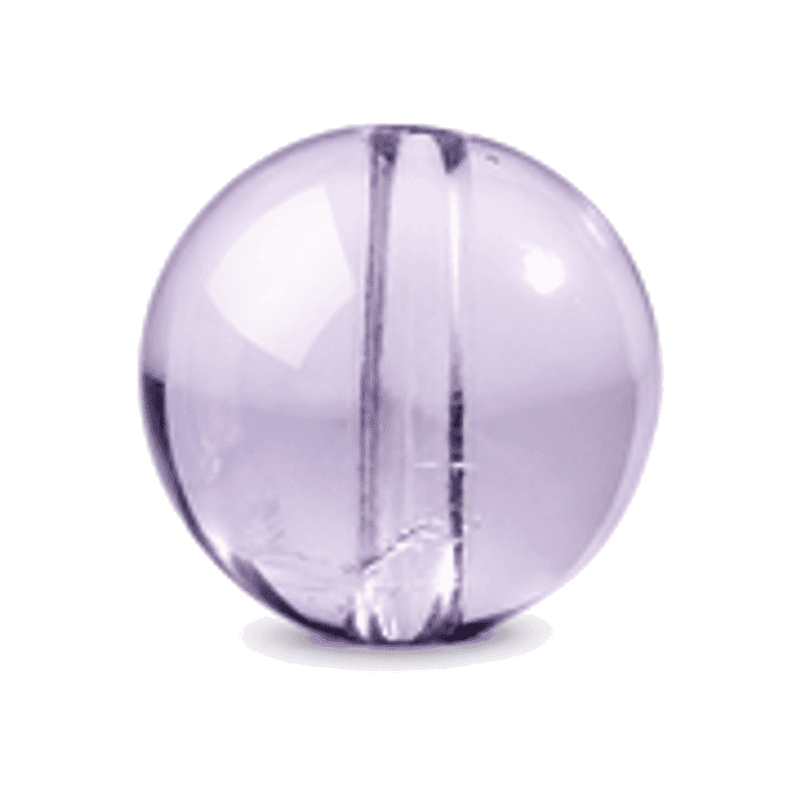
Bolivian Light Amethyst
From the Anahí mine — the one deposit that grows purple and gold together in a single crystal.
- Hardness
- Mohs 7
- Density
- Quartz (amethyst)
- Material
- Anahí mine, Santa Cruz, Bolivia
The Anahí mine in eastern Bolivia is famous for ametrine, purple and gold grown side by side in one stone because two parts of the same crystal sat at slightly different temperatures. The lighter amethyst comes from the same workings. A grade and a place, not a species.
Traditions recorded
Greek and Roman
c. 4th century BCE – 1st century CE
The name is Greek: amethystos, not drunken. Classical writers record the belief that the stone resisted intoxication, and drinking vessels were cut from it on that basis. Pliny reports the belief and is openly sceptical of it, calling the promises attached to it the inventions of the magi — which makes this one of the earliest pieces of consumer scepticism on record.
Pliny, Naturalis Historia, Book 37
Christian Europe
Medieval – present
Amethyst became the conventional stone of a bishop's ring in the Western church, a usage still current today. Medieval lapidaries — the compiled stone-books of the period, of which Marbode of Rennes' is by far the most copied — carry the classical association with sobriety forward into a Christian frame.
Vedic gem lore
Classical, still practised
In Jyotish, amethyst (jamunia) serves as an uparatna — a secondary stone standing in for blue sapphire, the stone of Saturn. Which stone is prescribed depends on an individual chart rather than on preference; the tradition has never treated gems as generally applicable, which is worth knowing before anyone quotes it at you.
Inherits its record
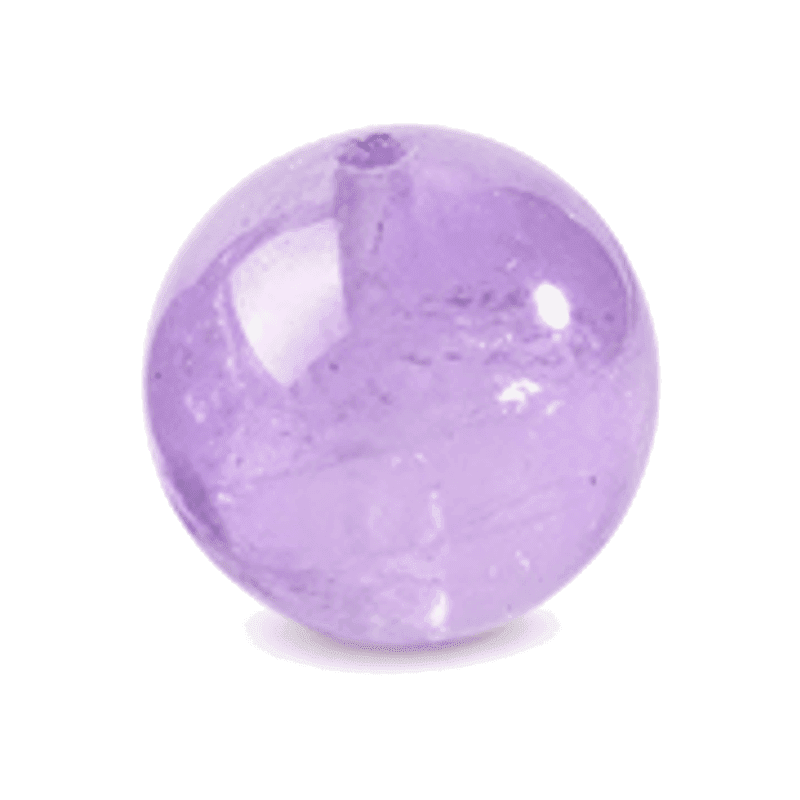
Lavender Amethyst
Amethyst at its palest — the colour iron gives when there is only a little of it to give.
- Hardness
- Mohs 7
- Density
- Quartz (amethyst)
- Material
- Brazil, Uruguay, Zambia
Amethyst's purple comes from trace iron altered by natural radiation in the ground; less iron, less colour. Lavender is the trade's word for the softest end of that range. It is a grade rather than a stone, and everything cultural belongs to amethyst.
Traditions recorded
Greek and Roman
c. 4th century BCE – 1st century CE
The name is Greek: amethystos, not drunken. Classical writers record the belief that the stone resisted intoxication, and drinking vessels were cut from it on that basis. Pliny reports the belief and is openly sceptical of it, calling the promises attached to it the inventions of the magi — which makes this one of the earliest pieces of consumer scepticism on record.
Pliny, Naturalis Historia, Book 37
Christian Europe
Medieval – present
Amethyst became the conventional stone of a bishop's ring in the Western church, a usage still current today. Medieval lapidaries — the compiled stone-books of the period, of which Marbode of Rennes' is by far the most copied — carry the classical association with sobriety forward into a Christian frame.
Vedic gem lore
Classical, still practised
In Jyotish, amethyst (jamunia) serves as an uparatna — a secondary stone standing in for blue sapphire, the stone of Saturn. Which stone is prescribed depends on an individual chart rather than on preference; the tradition has never treated gems as generally applicable, which is worth knowing before anyone quotes it at you.
Documented record
Amethyst
Greek amethystos, “not drunken” — the one gemstone whose name is an argument, and whose first recorder doubted it.
- Hardness
- Mohs 7
- Density
- 2.65 g/cm³
- Material
- Quartz coloured by trace iron and natural radiation
- Sources
- Brazil, Uruguay, Bolivia, Zambia
The name is Greek — amethystos, “not drunken” — and classical writers record the belief that the stone resisted intoxication, though Pliny reported it while openly doubting it. Amethyst has been the conventional stone of a bishop's ring in the Western church since the Middle Ages.
Traditions recorded
Greek and Roman
c. 4th century BCE – 1st century CE
The name is Greek: amethystos, not drunken. Classical writers record the belief that the stone resisted intoxication, and drinking vessels were cut from it on that basis. Pliny reports the belief and is openly sceptical of it, calling the promises attached to it the inventions of the magi — which makes this one of the earliest pieces of consumer scepticism on record.
Pliny, Naturalis Historia, Book 37
Christian Europe
Medieval – present
Amethyst became the conventional stone of a bishop's ring in the Western church, a usage still current today. Medieval lapidaries — the compiled stone-books of the period, of which Marbode of Rennes' is by far the most copied — carry the classical association with sobriety forward into a Christian frame.
Vedic gem lore
Classical, still practised
In Jyotish, amethyst (jamunia) serves as an uparatna — a secondary stone standing in for blue sapphire, the stone of Saturn. Which stone is prescribed depends on an individual chart rather than on preference; the tradition has never treated gems as generally applicable, which is worth knowing before anyone quotes it at you.
Build a bracelet from the stones you have just read about.
Pick the beads, the size and the order they sit in. Every stone on this page is available in the studio.